How to personalise event follow-ups at scale
Generic follow-ups read like cold emails. Here's how to send every lead a message that references your actual conversation, without spending days writing.

Founder & CEO
Airley
Insight

After a busy event, most teams face the same choice: spend days writing a thoughtful email to every lead, or send everyone the same template on Monday morning. The template usually wins, and it shows. A message that could have been sent to anyone reads like a cold email, even to someone you spent twenty minutes talking to.
The good news is that personalisation at scale is mostly a process problem, not a writing problem.
1. Capture context in the moment
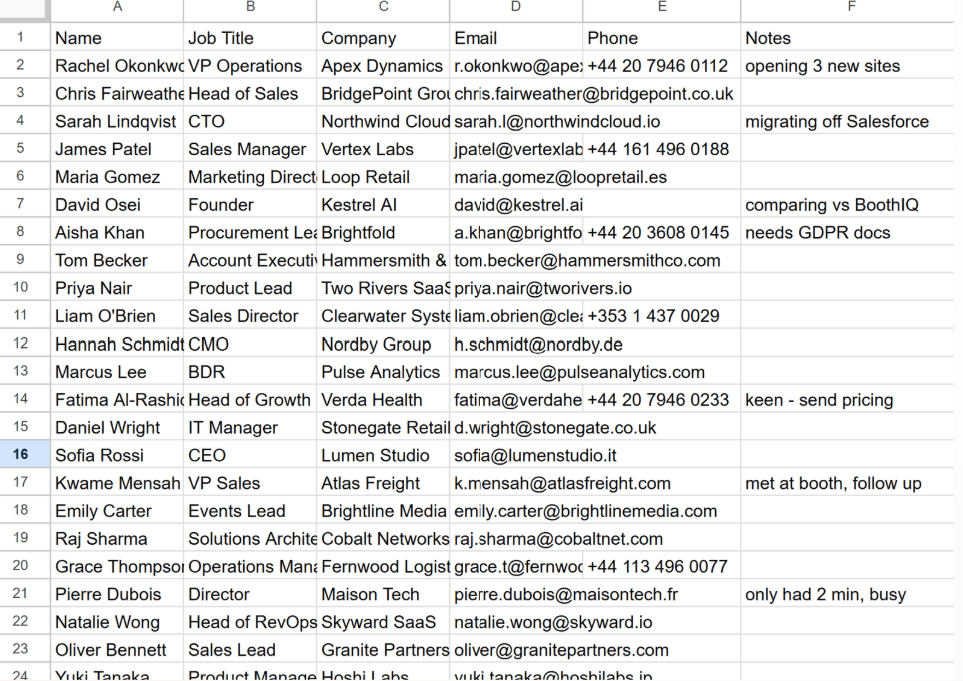
Personalisation starts on the stand, not at your desk. Straight after each conversation, record three things: the problem they mentioned, anything you promised to send and the next step you agreed. A quick voice note or a few words against the badge scan is enough. If you don't capture it then, it's gone by the end of the day.
2. Enrich before you write
A badge gives you a name and a company. Add a verified email, LinkedIn profile and basic company information, such as size, industry and what they sell, so you can tailor the message to their business, not just their job title.
3. Template the structure, not the message
Write one strong framework for each type of conversation: the hot lead, the early-stage researcher, the partner. Keep the structure consistent and leave clear slots for the personal detail: what they said, what you promised and why it matters to them.
4. Sequence, don't send once
One email is rarely enough. Plan a short multi-touch sequence across email, LinkedIn and calls, and let each step respond to what happened before. Someone who opened your email three times needs a different nudge from someone who hasn't opened it at all.
5. Prioritise by intent
Not every lead deserves the same effort. Score them on the stand or straight after. Spend your personal time on the hottest conversations and let the structured sequence handle the rest.
Let AI do the heavy lifting
Airley's Context Engine turns your notes and voice memos into a personalised follow-up sequence for every lead, scores each draft by confidence so you know which to review and adapts the next touchpoint based on opens, replies and clicks. Every prospect gets a message that shows you remembered them, because you did.